
Carlo Hoffmann · 14 October 2026
Examining Referral Traffic Patterns After Account Handovers in Multi-Domain Setups
Account handovers in multi-domain environments involve the transfer of administrative control over several connected domains from one owner or platform to another, and observers note that these transitions frequently alter how referral traffic flows between sites. Referral traffic consists of visitors arriving via links from external websites, and data shows that changes in account ownership can modify tracking setups, authentication protocols, and cross-domain configurations that previously directed those visitors. Researchers have documented cases where such handovers led to temporary drops in recorded referrals because analytics properties required re-verification or because cookie domains needed adjustment to maintain session continuity across the network of sites.
Core Elements of Multi-Domain Account Transfers
Multi-domain setups often link primary domains with subdomains or sister sites under a single analytics account or content management system, and when ownership changes hands the new administrators must replicate these connections. According to the Australian Bureau of Statistics, internet activity reports indicate that organizations managing multiple domains experienced measurable shifts in visitor pathways during ownership transitions throughout 2025 and into 2026. The process typically includes updating Google Analytics or similar platforms to recognize the new account credentials, re-establishing cross-domain tracking parameters, and verifying that referral exclusion lists still prevent internal traffic from being miscategorized. Those who have managed these transfers report that delays in completing these steps commonly result in referral sources appearing as direct traffic instead of attributed links.
Observed Traffic Pattern Changes
Studies of referral behavior after handovers reveal several recurring patterns. One common occurrence involves an initial spike in direct traffic that later resolves once proper tracking parameters are restored, while another pattern shows referral sources from partner domains dropping until new authentication tokens propagate. In October 2026 analysts tracking large-scale migrations noted that sites using shared Google Tag Manager containers experienced faster recovery of referral attribution compared with those relying on separate property configurations. Data indicates that the duration of these disruptions varies with the complexity of the domain network, with setups exceeding five interconnected domains requiring additional weeks for full referral visibility to return.
Factors Affecting Referral Attribution
Several technical elements influence how referral traffic registers after an account handover. Changes to default referral exclusion settings can cause external links to lose their source attribution, and updates to cookie scopes may prevent session data from carrying over between domains. Observers have recorded instances where subdomain handovers disrupted the flow of referral information because the new account holder needed to reconfigure the measurement ID across every property. Research indicates that sites employing server-side tracking solutions encountered fewer interruptions than those depending solely on client-side scripts, since server configurations often survive credential changes more reliably.
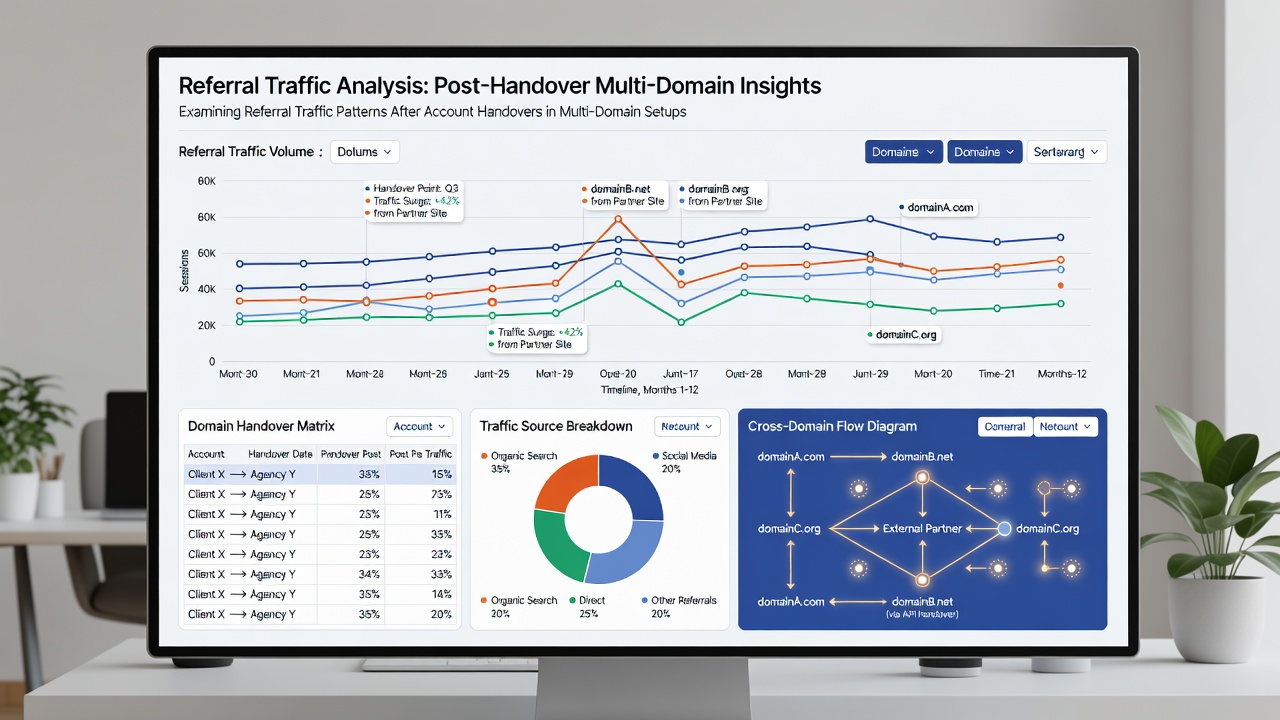
Another factor involves the propagation of changes through content delivery networks and caching layers, which can delay the appearance of updated referral data in analytics dashboards. Those managing multi-domain portfolios frequently discover that monitoring tools must be recalibrated to capture the same referral streams that existed before the handover. Evidence from industry reports suggests that organizations maintaining detailed documentation of prior tracking implementations achieve quicker restoration of accurate referral reporting.
Recovery Timelines and Measurement Adjustments
Recovery of referral traffic visibility typically follows a predictable sequence once the new account administrators complete verification steps. Initial audits identify broken cross-domain links, followed by implementation of updated tracking codes and testing across sample user journeys. In October 2026 several large-scale domain transfers demonstrated that teams allocating dedicated resources to referral validation reduced the period of incomplete data from an average of 18 days to under 10 days. Analysts recommend running parallel tracking implementations during the transition period to compare pre- and post-handover referral sources and to isolate any configuration issues introduced by the account change.
Conclusion
Referral traffic patterns after account handovers in multi-domain setups reflect the interplay between technical configuration updates and measurement continuity. Organizations that systematically address tracking parameters, cookie scopes, and verification processes see more consistent attribution of referral sources over time. Available data from sources such as the Australian Bureau of Statistics and Statistics Canada continues to highlight the importance of maintaining accurate cross-domain measurement during ownership transitions.