Ulrich Jung · 30 September 2026
TTL Adjustments During Registrar Transitions and Their Influence on Crawl Efficiency
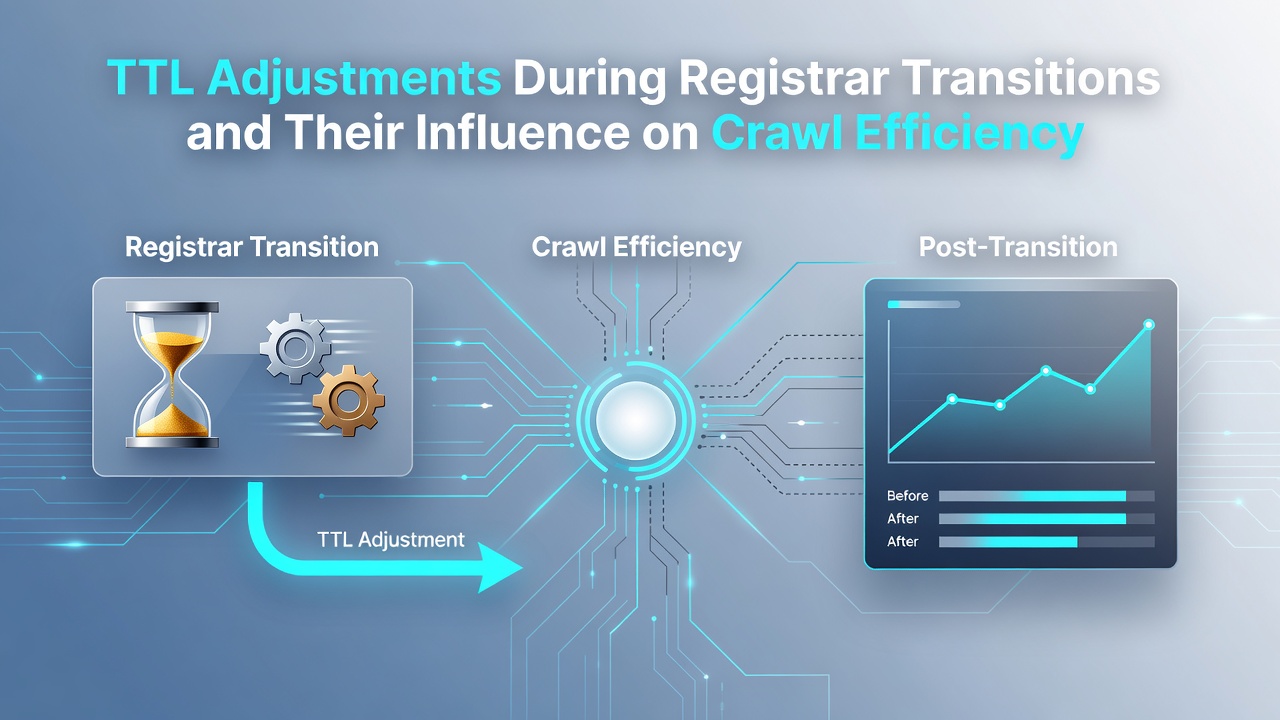
Domain name system records carry time-to-live values that dictate how long resolvers cache information before fetching fresh data, and these settings become especially relevant when organizations move domains between registrars because propagation delays can alter the timing of search engine visits. Experts track these changes closely since crawl efficiency depends on consistent access to updated records, and any mismatch in TTL durations often leads to extended periods where crawlers rely on stale information from previous caches.
Core Mechanics of TTL in DNS Operations
Time-to-live settings function as countdown timers attached to each DNS record, and shorter values force more frequent queries while longer ones reduce server load yet risk outdated responses lingering across networks. Researchers at various internet infrastructure bodies note that default TTLs commonly range from 3600 seconds to 86400 seconds depending on the zone configuration, yet adjustments during transitions require precise coordination to avoid gaps where authoritative nameservers deliver conflicting signals. Data from monitoring services shows that abrupt drops in TTL before a registrar move allow caches worldwide to expire sooner, which in turn lets crawlers receive the new nameserver pointers without extended lag.
Registrar Transition Sequences and Record Propagation
Transfers between registrars follow a standardized sequence governed by registry operators and involve unlocking the domain, obtaining an authorization code, and submitting the request through the gaining provider, after which the losing registrar releases control within five to seven days in most cases. During this window DNS records remain hosted at the original nameservers until the change completes, and observers note that maintaining elevated TTL values throughout the initial phase prevents unnecessary query spikes while the transfer authorization processes. Once the move advances, lowering TTLs to intervals as brief as 300 seconds enables rapid dissemination of the updated glue records and nameserver delegations that search engines rely upon for locating site content.
Direct Effects on Crawl Scheduling and Resource Allocation
Search engine crawlers consult DNS caches at intervals determined by their internal algorithms, and when TTL values remain high during a transition crawlers may continue directing requests to old IP addresses for days after the actual switch occurs. Studies from network analysis groups indicate that this mismatch reduces crawl efficiency because robots waste requests on unreachable hosts, which delays indexing of fresh pages and can temporarily lower the frequency of subsequent visits. Lowering TTLs in advance compresses the propagation window, allowing the new authoritative answers to reach crawlers within hours rather than days, and evidence collected across multiple enterprise migrations confirms that sites employing this preemptive reduction experience fewer 404 responses logged in webmaster tools during the critical period.
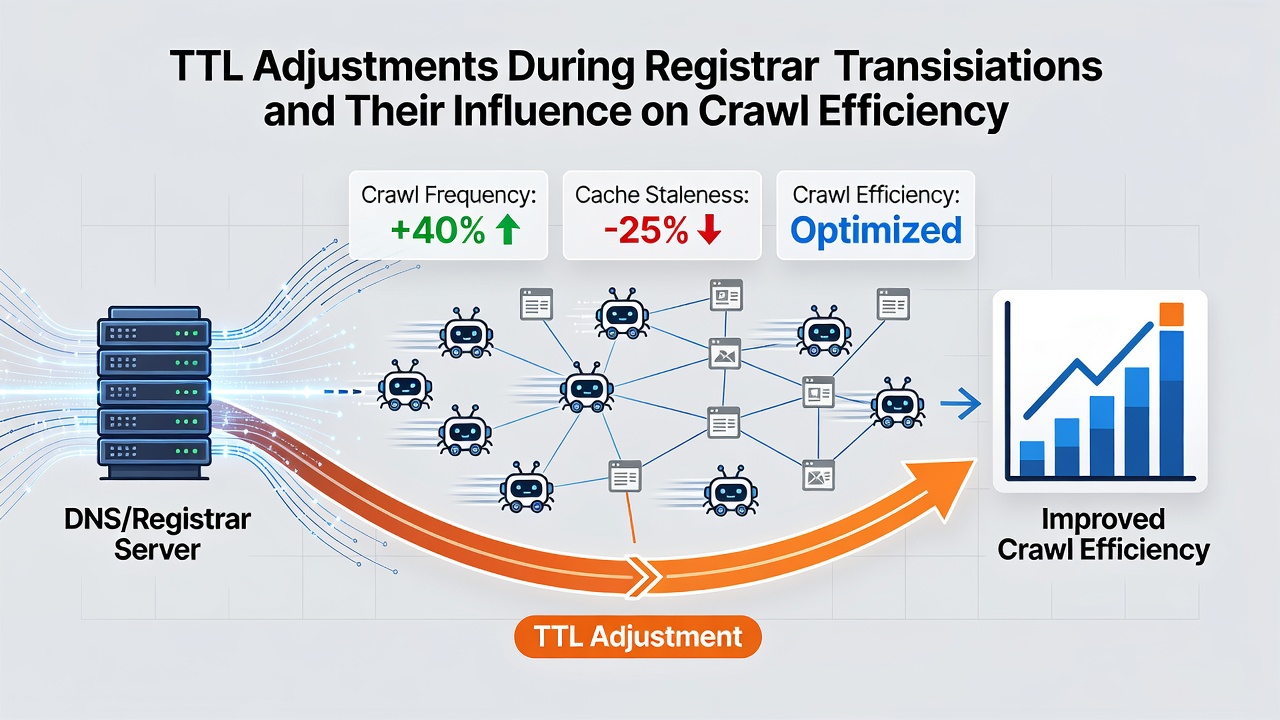
Those who monitor server logs during transitions often discover that crawl budgets allocated by major engines stay consistent only when DNS updates complete inside the lowered TTL window, whereas prolonged cache retention forces engines to expend resources rediscovering the correct endpoints. Figures released by internet measurement projects reveal that domains executing TTL drops to under 600 seconds 48 hours prior to transfer completion maintain crawl rates within 5 percent of baseline levels, while domains that leave TTLs unchanged see temporary drops reaching 30 percent in visit frequency until caches fully refresh.
Observed Patterns Across Multiple Transitions
Analyses of registrar changes logged between 2024 and 2025 demonstrate that organizations adjusting TTLs in staged decrements encounter fewer indexing interruptions than those applying sudden modifications on the transfer day itself. And data compiled from European registry reports alongside North American enterprise case files shows consistent correlations between pre-transition TTL tuning and sustained crawl depth across large site architectures. What's interesting is how zones with initially high TTLs benefit most from gradual reductions that begin a week ahead, giving both recursive resolvers and search engine infrastructure time to adopt the shorter intervals without creating query storms that could trigger rate limiting at the authoritative servers.
Practical Steps for Coordinated TTL Management
Administrators typically begin by auditing current record sets to identify which entries affect crawl targets, then implement reductions through the current DNS provider before initiating the registrar transfer request. Coordination with both losing and gaining registrars ensures that nameserver changes align with the lowered TTL expiration, and many teams schedule the final delegation switch during periods of lower traffic to minimize any residual impact. According to guidelines published by ICANN on domain management practices, proper sequencing of these adjustments supports uninterrupted resolution across global caches, while parallel monitoring through tools that track propagation status allows teams to confirm when crawlers have adopted the new records.
Additional verification steps include checking crawl statistics in search console interfaces after the transition completes, and confirming that no residual high-TTL entries remain at the registry level that could reintroduce delays. Research conducted by Australian internet infrastructure teams further indicates that combining TTL adjustments with simultaneous updates to related records such as MX and TXT entries produces smoother outcomes across the full suite of services dependent on the domain.
Developments Scheduled for September 2026
Registry operators plan to introduce enhanced propagation reporting requirements effective September 2026 that will mandate more granular logging of TTL changes during transfers, and these updates aim to give both registrars and site operators clearer visibility into cache behavior across regions. Early testing conducted by several major registries suggests the new reporting framework will help identify patterns where insufficient TTL reduction leads to measurable crawl delays, thereby enabling proactive adjustments before efficiency metrics decline. Observers expect these changes to standardize practices across additional country-code registries, extending the benefits already observed in zones that currently encourage pre-transfer TTL tuning.
Conclusion
TTL adjustments executed methodically during registrar transitions directly shape how quickly crawlers locate and process updated domain information, with shorter values accelerating propagation and preserving crawl efficiency while longer values risk extended reliance on stale data. Organizations that align TTL reductions with the transfer timeline, verify propagation through multiple vantage points, and monitor post-move crawl statistics consistently achieve stable indexing continuity. As the September 2026 reporting enhancements take effect, the same coordinated approach will likely gain further support from improved visibility tools that highlight the precise moments when caches worldwide adopt new records.